
The Intersection of Blockchain and IoT: Creating a More Connected and Secure World
The Internet of Things (IoT) is transforming various aspects of daily life by connecting devices and systems to the internet, enabling them to communicate and interact with one another. However, as the number of connected devices grows, so do concerns about security, data privacy, and system reliability. Blockchain technology offers a promising solution to these challenges, providing a decentralized and secure framework for managing and verifying IoT interactions.
One of the key benefits of integrating blockchain with IoT is enhanced security. Traditional IoT systems often rely on centralized servers and databases, which can be vulnerable to cyberattacks and data breaches. Blockchain’s decentralized nature provides a distributed ledger that records all interactions and transactions in a tamper-proof and transparent manner. This decentralized approach reduces the risk of single points of failure and enhances the overall security of IoT systems by making it more difficult for malicious actors to compromise the network.
Blockchain also addresses issues related to data privacy and integrity. IoT devices generate vast amounts of data, which must be securely transmitted, stored, and managed. Blockchain’s cryptographic algorithms ensure that data is encrypted and protected from unauthorized access. Additionally, blockchain’s immutable ledger provides a verifiable record of data transactions, allowing users to track and verify the authenticity and integrity of the data collected by IoT devices. This transparency helps prevent data tampering and ensures that the information used for decision-making is accurate and reliable.
Another significant advantage of combining blockchain with IoT is the ability to automate and streamline processes through smart contracts. Smart contracts are self-executing agreements with predefined rules and conditions encoded into the blockchain. In an IoT context, smart contracts can automate various functions, such as triggering actions based on sensor data or managing device interactions. For example, a smart contract could automatically execute a payment when a sensor detects that a shipment has been delivered, eliminating the need for manual processing and reducing the potential for errors or delays.
The integration of blockchain and IoT also enables new business models and opportunities. For instance, blockchain-based platforms can facilitate decentralized IoT networks where devices interact directly with one another without the need for intermediaries. This decentralized approach can enhance efficiency and reduce costs by eliminating the need for centralized management and control. Additionally, blockchain can support the creation of decentralized marketplaces for IoT data and services, allowing users to buy, sell, and exchange data in a secure and transparent manner.
Despite its potential, the intersection of blockchain and IoT faces challenges such as scalability, interoperability, and regulatory compliance. As the number of connected devices grows, blockchain networks must be able to handle a high volume of transactions efficiently. Ensuring interoperability between different blockchain platforms and IoT systems is also crucial for creating a seamless and integrated ecosystem. Additionally, regulatory considerations related to data privacy, security, and blockchain technology must be addressed to ensure compliance and foster widespread adoption.
In conclusion, the integration of blockchain with IoT holds significant promise for creating a more connected and secure world. By enhancing security, privacy, and automation, blockchain technology addresses many of the challenges associated with traditional IoT systems. As the technology continues to advance and evolve, its impact on the IoT landscape is likely to grow, offering innovative solutions and new opportunities for businesses and individuals alike.
Stay in the Loop



You May Also Like
 IOT & Blockchain 4 min read| 04 Oct 2025
The Data Dividend: Can Blockchain Help Us Own Our Data?
Blockchain technology offers potential solutions to empower individuals with ownership and control over their personal data, fostering privacy and fair compensation.
 Cloud & SaaS 7 min read| 18 Oct 2025
How AR and VR Are Enhancing Sports Training and Performance Analysis
Augmented Reality (AR) and Virtual Reality (VR) are making significant contributions to sports training and performance analysis, offering athletes and coaches innovative tools to enhance skills, improve performance, and gain valuable insights. By providing immersive and interactive environments, AR and VR technologies are transforming how sports training is conducted and how performance is evaluated.
 Cloud & SaaS 6 min read| 05 Oct 2025
AR for Astronauts: Training for Space Exploration on Earth
Augmented Reality (AR) technology is revolutionizing astronaut training by providing immersive and realistic simulations of space exploration missions right here on Earth. From extravehicular activities (EVAs) to spacecraft operations, AR enables astronauts to practice and prepare for the challenges of space travel in a safe and controlled environment.
 Cloud & SaaS 7 min read| 07 Oct 2025
The Impact of Augmented Reality on Retail: Shopping in a Virtual World
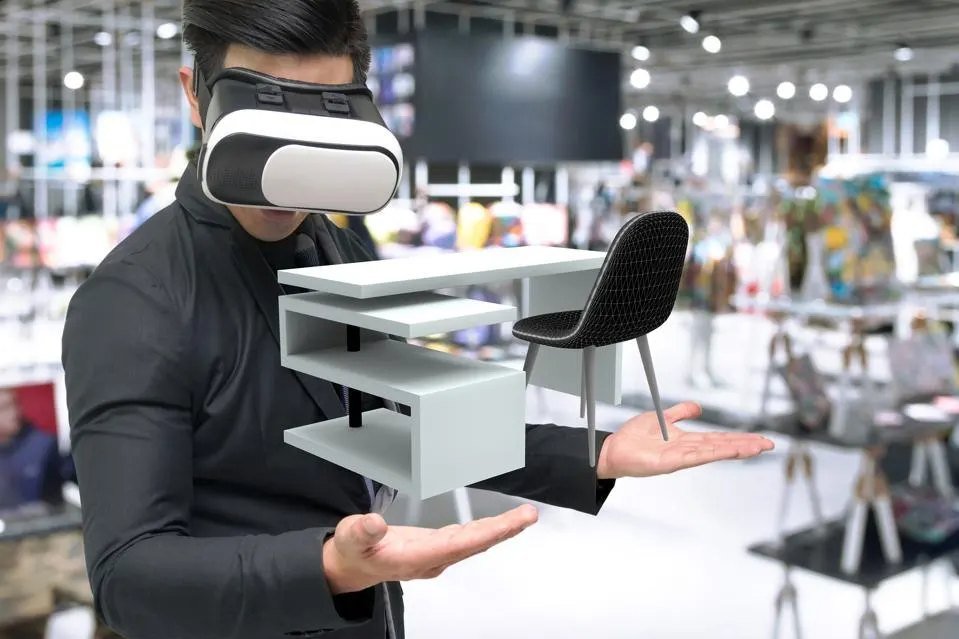
Augmented Reality (AR) is revolutionizing the retail industry by enhancing the shopping experience and transforming how consumers interact with products. AR technology overlays digital information onto the real world, allowing shoppers to visualize and interact with products in new and innovative ways. This immersive technology is reshaping retail by providing personalized and engaging experiences for customers.