

The Future of Decentralized Finance (DeFi) in 2025
Decentralized Finance, or DeFi, is transforming the financial landscape by enabling peer-to-peer transactions without intermediaries like banks or traditional financial institutions. With blockchain technology as its backbone, DeFi provides transparency, security, and inclusivity to global financial systems. As we approach 2025, DeFi is poised to disrupt traditional banking, lending, and investment practices even further, offering a wide range of opportunities for individuals and institutions alike.
How DeFi WorksDeFi operates using smart contracts on blockchain networks such as Ethereum, Binance Smart Chain, and Solana. These contracts automatically execute transactions when predefined conditions are met, eliminating the need for intermediaries. Users can lend, borrow, trade, and earn interest directly using decentralized protocols, creating an open and accessible financial ecosystem.
** Core Components of DeFi
- Decentralized exchanges (DEXs) for peer-to-peer trading - Lending and borrowing protocols for financial flexibility - Yield farming and staking platforms to maximize returns - Stablecoins for predictable value storage and low volatility - Oracles that connect blockchain networks with real-world data
https://www.youtube.com/watch?v=Kzk7qC2k5Lc
DeFi democratizes access to financial services, offering opportunities to individuals without traditional bank accounts. It also provides higher yields compared to conventional banking and promotes transparency through open-source code that can be audited by anyone. Moreover, DeFi reduces the reliance on centralized institutions, potentially lowering fees and increasing efficiency.
** Benefits in 2025
- Global access to financial services regardless of geographic location - Reduced reliance on banks and financial intermediaries - Greater control over personal assets and investments - Transparency and security through immutable blockchain records - Increased innovation in financial products and services
[https://blockone.us/The-Data-Dividend-Can-Blockchain-Help-Us-Own-Our-Data-](The Data Dividend: Can Blockchain Help Us Own Our Data?)

💡 Discover More from IOT & Blockchain

AI & Automation
The Future of Quantum AI: What Happens When AI Meets Quantum Computing?

AI & Automation
How AI is Enhancing Video Games: Creating Smarter NPCs and Dynamic Worlds

AI & Automation
The Role of AI in Drug Discovery: Speeding Up Breakthroughs

AI & Automation
AI in E-Commerce: Revolutionizing Customer Experience and Logistics
Despite its promise, DeFi faces regulatory uncertainty, potential smart contract vulnerabilities, and market volatility. User education and security measures are critical to mitigate these risks. Adoption also depends on developing user-friendly interfaces and robust customer support, as many users are still unfamiliar with blockchain technology.
[https://www.investopedia.com/decentralized-finance-defi-5189876](Investopedia on DeFi Challenges)
The Future Outlook for DeFi in 2025As DeFi evolves, it is expected to integrate with traditional finance, creating hybrid models that combine decentralization with regulatory compliance. Advancements in scalability, security, and interoperability between blockchains will make DeFi more user-friendly and accessible. By 2025, we anticipate wider adoption in payments, insurance, lending, and investment sectors, along with the development of decentralized identity systems and insurance products.
[https://www.coindesk.com/learn/decentralized-finance-defi-2025](Coindesk on DeFi Future)
Stay in the Loop



You May Also Like
 IOT & Blockchain 4 min read| 04 Oct 2025
The Data Dividend: Can Blockchain Help Us Own Our Data?
Blockchain technology offers potential solutions to empower individuals with ownership and control over their personal data, fostering privacy and fair compensation.
 Cloud & SaaS 7 min read| 18 Oct 2025
How AR and VR Are Enhancing Sports Training and Performance Analysis
Augmented Reality (AR) and Virtual Reality (VR) are making significant contributions to sports training and performance analysis, offering athletes and coaches innovative tools to enhance skills, improve performance, and gain valuable insights. By providing immersive and interactive environments, AR and VR technologies are transforming how sports training is conducted and how performance is evaluated.
 Cloud & SaaS 6 min read| 05 Oct 2025
AR for Astronauts: Training for Space Exploration on Earth
Augmented Reality (AR) technology is revolutionizing astronaut training by providing immersive and realistic simulations of space exploration missions right here on Earth. From extravehicular activities (EVAs) to spacecraft operations, AR enables astronauts to practice and prepare for the challenges of space travel in a safe and controlled environment.
 Cloud & SaaS 7 min read| 07 Oct 2025
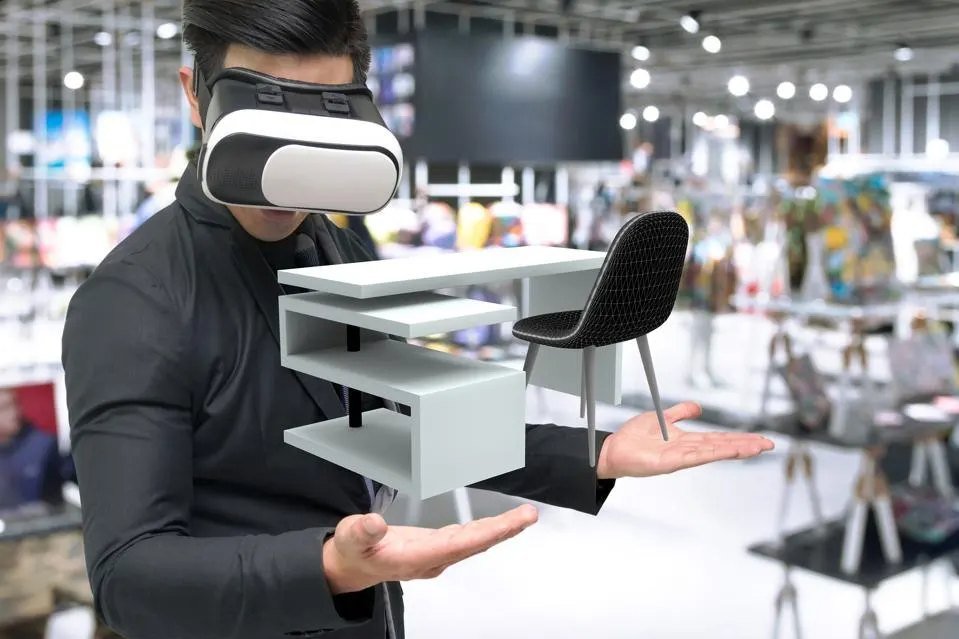
The Impact of Augmented Reality on Retail: Shopping in a Virtual World
Augmented Reality (AR) is revolutionizing the retail industry by enhancing the shopping experience and transforming how consumers interact with products. AR technology overlays digital information onto the real world, allowing shoppers to visualize and interact with products in new and innovative ways. This immersive technology is reshaping retail by providing personalized and engaging experiences for customers.