

Blockchain in Healthcare: Securing Patient Data
Blockchain technology is transforming the healthcare industry by providing secure, transparent, and tamper-proof systems for managing patient data. Traditional healthcare systems often face issues of data breaches, fragmented records, and lack of interoperability. Blockchain offers a decentralized approach that ensures privacy while enabling seamless access to authorized medical professionals. By 2025, blockchain is expected to play a critical role in patient data management, clinical trials, and health research, driving both efficiency and trust in healthcare systems worldwide.
How Blockchain Secures Patient DataBlockchain uses cryptographic techniques and a distributed ledger to store medical records across multiple nodes. Each transaction is recorded permanently, ensuring that records cannot be altered or deleted without consensus. This guarantees data integrity, transparency, and accountability, which is essential for sensitive healthcare information.
** Key Applications in Healthcare
- Secure electronic health records (EHRs) accessible only by authorized users - Tracking pharmaceuticals to prevent counterfeit drugs - Managing consent and patient permissions for data sharing - Facilitating clinical trials by ensuring transparent and verifiable data - Enabling telemedicine with secure patient information exchange - Integration with AI for predictive analytics and personalized treatments
https://www.youtube.com/shorts/XQL8gqDqGnY
Blockchain improves patient data security, reduces administrative costs, and enhances interoperability between healthcare providers. Patients gain more control over their data, while providers benefit from accurate and up-to-date medical information. Additionally, blockchain can enhance billing, claims processing, and insurance verification, reducing fraud and inefficiencies.
** Advantages
- Enhanced data privacy and security - Reduced risk of data breaches - Streamlined data sharing between hospitals and clinics - Improved patient trust and engagement - Faster insurance claims and reduced administrative burden - Reliable tracking of pharmaceuticals and supply chains
[https://blockone.us/The-Creator-Economy-on-Steroids-Blockchain-Empowers-Content-Creators](The Creator Economy on Steroids: Blockchain Empowers Content Creators)
💡 Discover More from IOT & Blockchain
AI & Automation
The Future of Quantum AI: What Happens When AI Meets Quantum Computing?

AI & Automation
How AI is Enhancing Video Games: Creating Smarter NPCs and Dynamic Worlds

AI & Automation
The Role of AI in Drug Discovery: Speeding Up Breakthroughs

AI & Automation
AI in E-Commerce: Revolutionizing Customer Experience and Logistics
Despite its benefits, blockchain adoption in healthcare faces challenges such as high implementation costs, scalability issues, interoperability concerns, and the need for regulatory compliance. Educating healthcare providers and patients about blockchain is also crucial to ensure successful adoption.
[https://www.healthit.gov/buzz-blog/blockchain-in-healthcare](HealthIT on Blockchain Challenges)
 Future Outlook
As blockchain technology matures, it is expected to play a larger role in patient data management, insurance claims processing, medical research, and clinical trials. Integration with AI and IoT devices will further enhance predictive analytics, personalized care, and real-time monitoring. By 2025, blockchain could become the standard for securing patient data globally, providing a reliable, transparent, and efficient healthcare ecosystem.
[https://www.forbes.com/sites/forbestechcouncil/2023/06/15/blockchain-in-healthcare](Forbes on Blockchain in Healthcare)
Stay in the Loop



You May Also Like
 IOT & Blockchain 4 min read| 04 Oct 2025
The Data Dividend: Can Blockchain Help Us Own Our Data?
Blockchain technology offers potential solutions to empower individuals with ownership and control over their personal data, fostering privacy and fair compensation.
 Cloud & SaaS 7 min read| 18 Oct 2025
How AR and VR Are Enhancing Sports Training and Performance Analysis
Augmented Reality (AR) and Virtual Reality (VR) are making significant contributions to sports training and performance analysis, offering athletes and coaches innovative tools to enhance skills, improve performance, and gain valuable insights. By providing immersive and interactive environments, AR and VR technologies are transforming how sports training is conducted and how performance is evaluated.
 Cloud & SaaS 6 min read| 05 Oct 2025
AR for Astronauts: Training for Space Exploration on Earth
Augmented Reality (AR) technology is revolutionizing astronaut training by providing immersive and realistic simulations of space exploration missions right here on Earth. From extravehicular activities (EVAs) to spacecraft operations, AR enables astronauts to practice and prepare for the challenges of space travel in a safe and controlled environment.
 Cloud & SaaS 7 min read| 07 Oct 2025
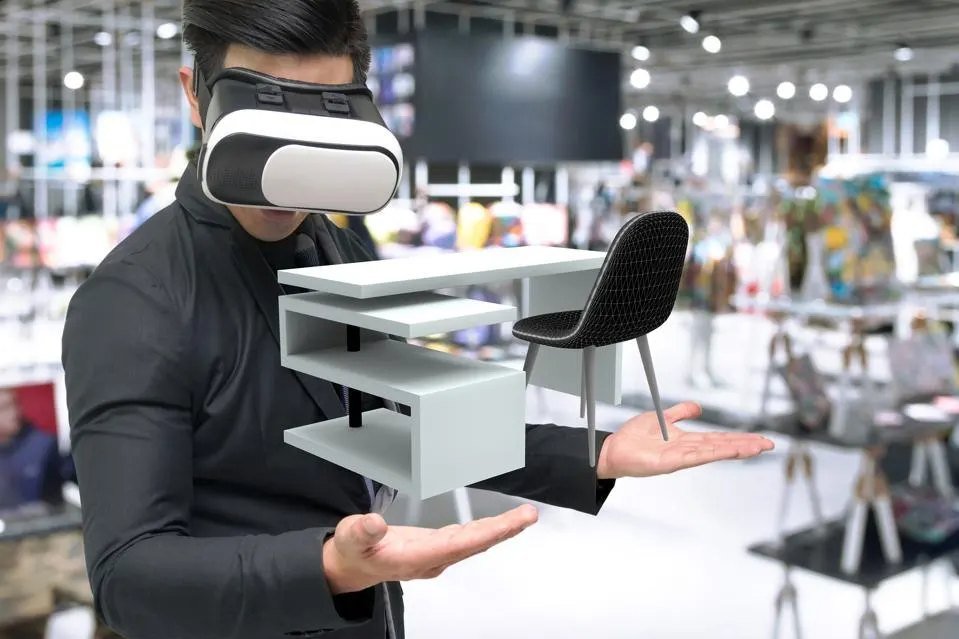
The Impact of Augmented Reality on Retail: Shopping in a Virtual World
Augmented Reality (AR) is revolutionizing the retail industry by enhancing the shopping experience and transforming how consumers interact with products. AR technology overlays digital information onto the real world, allowing shoppers to visualize and interact with products in new and innovative ways. This immersive technology is reshaping retail by providing personalized and engaging experiences for customers.